
Illinois FOIA Basics for Lake County
The Illinois Freedom of Information Act at 5 ILCS 140 sets the right to inspect or copy public records held by Illinois public bodies. The Act states that Illinois public policy favors access to complete information about government affairs and official acts. FOIA covers request procedures, response deadlines, exemptions, fee rules, and review through the Public Access Counselor and the courts.
FOIA applies to county agencies and offices but is not the only path to a record. Court case records are kept by the Clerk of the Circuit Court and follow court rules rather than FOIA. Vital records sit with the County Clerk under separate statutes. A FOIA request to the wrong office often results in a referral that adds time. Pick the right custodian, then file the request.
Court Records vs Agency Records in Lake County
The line between court records and agency records is important in Lake County. A police report is an agency record held by the arresting department. A jail policy or inspection report is an agency record held by the Sheriff. A budget document is an agency record held by Finance or the County Board office. The Circuit Clerk holds the case file once a charge is filed in the Circuit Court, but the underlying police report stays with the police agency.
| Record Type | Custodian | How to Access |
|---|---|---|
| Police report | Local police or Sheriff | FOIA request to the agency |
| Jail inspection / policy | Lake County Sheriff | FOIA to the Sheriff's FOIA officer |
| County budget / contract | County Finance / Administration | FOIA to the county FOIA officer |
| Court case file | Clerk of the Circuit Court | Circuit Clerk portal, E-Certify, or paper request |
| Birth / marriage / death | County Clerk Vital Records | Vital Records counter, mail, or VitalChek |
| Deeds / liens / recorded documents | County Clerk official record portal | Quick Search at lake.il.publicsearch.us |
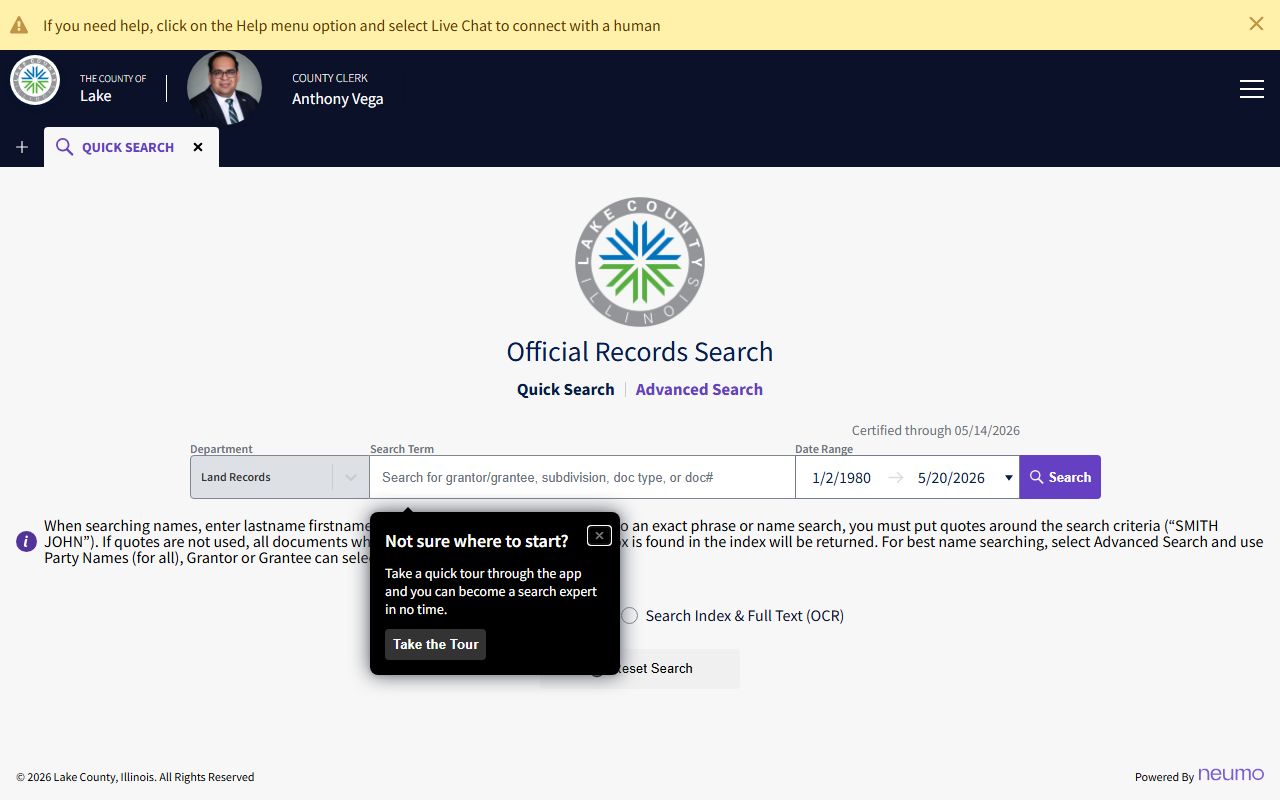
The image shows the County Clerk's official-record search portal, which exposes Quick Search, Advanced Search, and account features for grantor, grantee, document type, parcel, and date filters.
How to File a Lake County Public Records Request
The right office sets the procedure, but the steps below cover the standard Illinois FOIA workflow for non-court agency records. The Public Access Counselor at the Office of the Illinois Attorney General offers review if a request is denied.
- Identify the right public body. Sheriff records go to the Sheriff. Budget and personnel records typically go to the county FOIA officer.
- Submit a written request. Email is allowed. Use the agency's FOIA email if posted; otherwise the FOIA officer or general office email.
- Describe the record specifically. "All emails from John Doe between Jan 1 and Mar 1, 2025 about Project X" works better than "all records about Project X."
- The agency must respond within 5 business days, or 21 business days for a commercial request, unless they invoke a 5-business-day extension under 5 ILCS 140/3.
- Pay any allowed fees. FOIA fees are limited under 5 ILCS 140/6; the first 50 pages of black-and-white copies are typically free.
- If the request is denied or partially redacted, request review by the Public Access Counselor or file in court.
Exemptions and Redactions
FOIA includes a long list of exemptions at 5 ILCS 140/7. Agencies can withhold or redact private information, certain law-enforcement records, security information, trade secrets, attorney-client and work-product material, and records prohibited from disclosure by other laws. Agencies must redact exempt portions and release non-exempt portions when feasible.
Private information includes Social Security numbers, driver license numbers, biometric identifiers, personal financial information, passwords, medical records, and personal contact information. These items are routinely redacted from arrest reports, police narratives, and personnel records before public release. The Mental Health and Developmental Disabilities Confidentiality Act at 740 ILCS 110 closes treatment records that may appear inside other public files.
Note: Public access does not always mean a complete record; redactions can keep specific fields private even when the larger document is released.
Sheriff and Law-Enforcement Records
The Lake County Sheriff's Office publishes many public-interest records online, including Active Warrants, the Sex Offender Registry link, accident and police report request paths, and online reporting tools. For records not posted online, file a FOIA request through the Sheriff. The Sheriff's main page links Accident and Police Reports under the public-services bar.
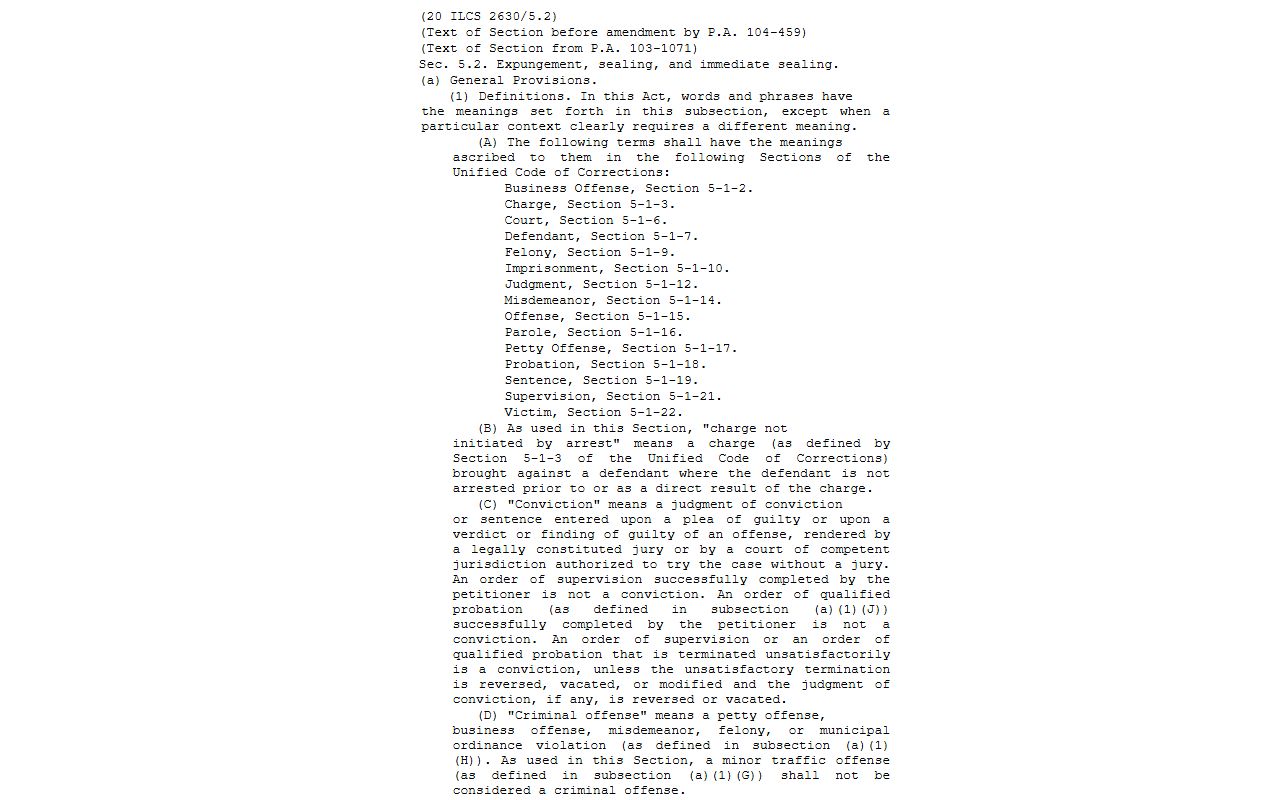
The Criminal Identification Act at 20 ILCS 2630/5.2 controls how expunged and sealed records are handled by law enforcement and the Illinois State Police.
County Clerk Records and Recorded Documents
The County Clerk maintains birth, death, marriage, and civil union records under Vital Records, plus elections, public filings, tax-related services, and recorded official documents through the official records portal. The Circuit Clerk does not hold marriage certificates; those come from the County Clerk's Room 101 office. For deeds, liens, mortgages, and similar recorded documents, the County Clerk's official-record portal supports Quick Search and Advanced Search.
Advanced Search includes grantor, grantee, document type, recorded-date range, parcel number, property address, legal description, and subdivision filters. Plaintiff and defendant fields show up for certain record types. Search results may be downloaded or printed; some records require account sign-in or payment to access full images.
Other Illinois Statutes That Shape Public Access
Several other statutes shape what the public can and cannot get from Lake County offices. They overlap with FOIA but live in their own chapters.
- 750 ILCS 5 - Illinois Marriage and Dissolution of Marriage Act, which governs divorce filings.
- 755 ILCS 5 - Illinois Probate Act.
- 705 ILCS 405 - Juvenile Court Act, which seals juvenile records.
- 750 ILCS 50 - Adoption Act, which closes adoption files.
- 730 ILCS 150 - Sex Offender Registration Act, which supports the public registry.
- 725 ILCS 5 - Code of Criminal Procedure, which sets warrant and bail rules.
Public Access Counselor opinions interpret FOIA against these statutes when conflicts come up. Lake County agencies generally cite the controlling statute in any partial denial.
Appealing a Public Records Denial
If a Lake County agency denies a FOIA request, the requester can ask the Public Access Counselor at the Office of the Illinois Attorney General for review. The PAC can issue binding or non-binding opinions. A requester can also file an action in the Circuit Court under 5 ILCS 140/11. Courts can order disclosure, award fees, and impose penalties when a denial is willful.
Most denials are resolved short of litigation. A specific written appeal that cites the agency's denial reasons and the relevant FOIA section often produces a revised response.
Official Source Directory
This short directory pulls the most-used official sources for Lake County public records into a single place.
| Source | What It Covers |
|---|---|
| County Clerk Vital Records | Birth, death, marriage, civil union |
| Official Record Search | Recorded documents, deeds, liens, mortgages |
| Clerk of the Circuit Court | Court case records, dockets, fees |
| Sheriff's Office | Warrants, inmate information, FOIA |
| State's Attorney | Prosecution, victim services, data dashboard |
Related pages: court records, Clerk of the Circuit Court, County Clerk, and criminal records.